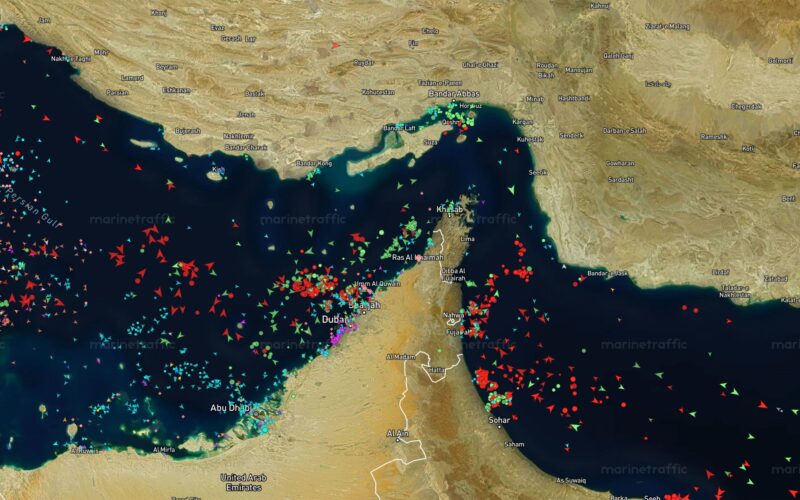
Every time a cheap drone gets shot down with an expensive missile, the maths moves in the wrong direction. Not dramatically. Not immediately. But across a sustained campaign, through depleted stocks, stretched procurement budgets, and rising operational costs, the defender bleeds out. This is not a future problem. It is happening now across the Gulf.
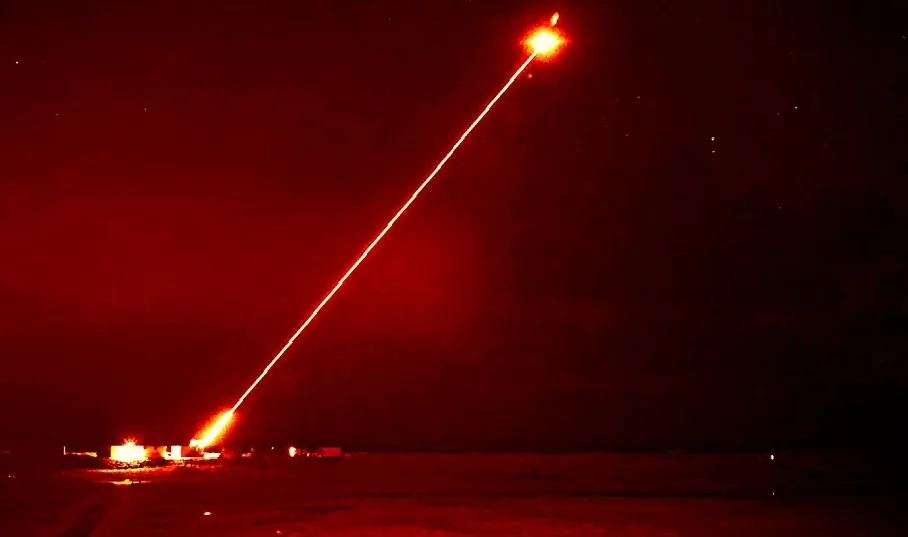
DragonFire changes that calculation. Developed by a British consortium led by MBDA UK, alongside Leonardo UK and QinetiQ, it is a high-power laser system that costs approximately £10 per shot and can hit a coin-sized target from a kilometre away. A traditional missile interceptor runs to hundreds of thousands of pounds per engagement. The economics are not comparable. (GOV.UK)
A £316 million contract was awarded to MBDA UK, with the first DragonFire systems arriving on Royal Navy ships in 2027. Optics.org The contract provides what officials describe as a minimum deployable capability, with installation planned on at least one Type 45 destroyer by 2027, around five years earlier than previously expected. AeroTimeRecent trials at the MOD’s Hebrides range saw DragonFire track, target, and destroy drones flying at up to 650 km/h, including the UK’s first above-the-horizon engagement. (Naval News)
Luke Pollard, UK Minister for Defence Readiness and Industry, was direct about what this is and what it isn’t. “DragonFire doesn’t replace missiles: it’s complementary to missiles. It provides a low-cost ability to defeat threats to those ships.”
Chris Allam, MBDA’s UK Managing Director, described the contract as a confirmation of direction. “This latest contract for DragonFire is another significant milestone. It re-affirms the UK’s intent to be at the forefront of laser directed energy weapons. The success of recent DragonFire trials are a testament to our MoD and industry team delivering a truly game-changing weapon system into the hands of the Royal Navy.” (MBDA)
That framing matters. This is not a next-generation Patriot replacement. It is a new lower tier in the defensive stack, built specifically to absorb high-volume, low-cost threats without burning through the interceptors reserved for ballistic missiles and high-end aerial attack. The UK’s Strategic Defence Review made the logic explicit, directing investment in directed energy weapons to reduce reliance on expensive ammunition and create sustainable alternatives to missiles.
The system has constraints. It requires line-of-sight and is sensitive to atmospheric conditions, which limits its use in complex open-ocean environments. But in the Gulf context those constraints matter less than they might elsewhere. The immediate value is at fixed, high-value sites: oil facilities, desalination plants, port approaches, coastal naval assets. Locations facing persistent drone pressure from non-state actors and proxies, where a repeatable near-zero-cost intercept capability reduces both operational exposure and long-term procurement burden.
As drone technology gets cheaper and more accessible to state and non-state actors across the region, the cost gap between attacker and defender widens. No additional Patriot battery closes that gap. A £10 laser shot does.
For Gulf procurement planners, the questions worth asking internally are already clear. Which fixed sites are most exposed to persistent low-cost drone attack? What does sustained missile-based defence of those sites cost across a six-month campaign? What does a complementary directed energy layer change about that number?
MBDA is already in dialogue with Gulf defence establishments across multiple programmes. DragonFire deploys on Royal Navy ships in 2027. Regional conversations will not be far behind. The operators who have done the cost analysis before those conversations start will be better placed than those who begin from scratch when a briefing lands on their desk. (Army Recognition)