The UAE’s Ministry of Defence has framed its recent performance under sustained attack as evidence that resilience, rather than firepower, is now the defining measure of national strength.
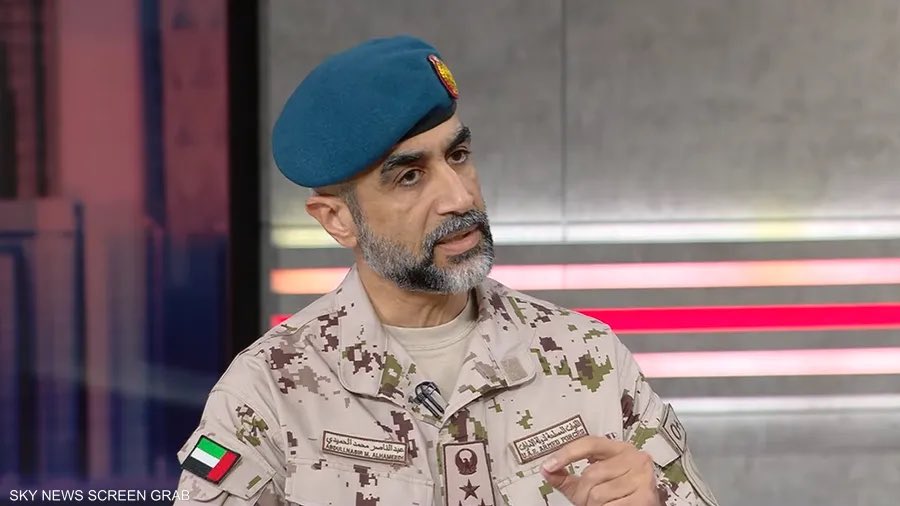
Speaking publicly, Brigadier Pilot Abdulnasser Al Hammadi said the UAE’s defence systems operated continuously over a 40-day period during which the country faced “hundreds of ballistic missiles, cruise missiles and drones”.
According to the Ministry, the majority of threats were intercepted, with only limited damage reported, largely from falling debris. More notably, Al Hammadi emphasised that operational tempo did not degrade over the course of the campaign.
“We are confident that even if such attacks continue, the system will maintain the same level of performance and efficiency,” he said.
The framing is deliberate.
Rather than focusing on interception rates alone, the Ministry has highlighted continuity. Government institutions continued to function, and daily life remained largely unaffected despite the scale of the attacks.
That aligns with a broader shift already visible across Gulf defence planning.
Air defence is no longer being measured solely by its ability to destroy incoming threats. It is being measured by whether the state continues to operate under pressure.
Al Hammadi described the UAE’s system as integrated and multi-layered, capable of responding across different threat types and altitudes, from ballistic missiles to low-flying drones. He also pointed to the role of domestic defence manufacturing in sustaining operations, particularly under conditions where global supply chains may be constrained.
Artificial intelligence and data-driven decision-making were also cited as part of the response architecture, supporting faster identification and engagement of incoming threats.
However, the underlying challenge remains unchanged.
The scale of drone and missile use across the region is increasing, and the cost of intercepting those threats continues to place pressure on even advanced defence systems. The UAE’s ability to sustain performance over 40 days is notable. Whether that model holds under prolonged or intensified conditions is the more relevant question.
What it means to our readers
The UAE’s messaging reflects a real shift in defence thinking. Resilience is becoming the primary metric. Not whether every threat is intercepted, but whether infrastructure, institutions and daily operations continue to function under sustained attack. For infrastructure operators, the implication is clear. The standard is no longer perfect protection. It is sustained operation under pressure.